Board Meeting Catering Setup That Builds Trust
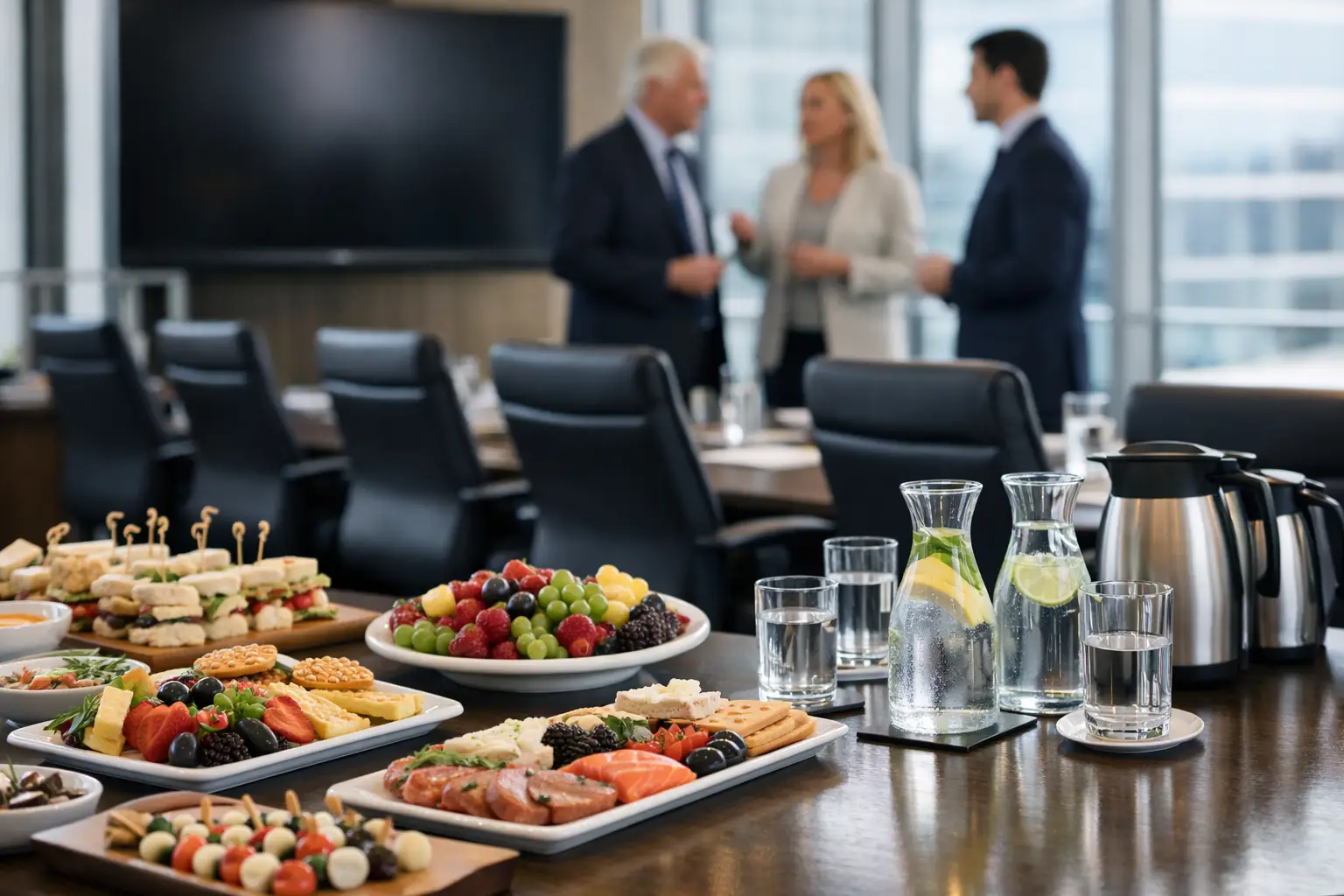
A board meeting leaves little room for operational distractions. When executives, institutional guests, or VIP stakeholders are gathered around the table, refreshments should support the conversation without interrupting it. A well-planned board meeting catering setup signals preparation, respect for guests, and confidence in the organization hosting them.
The standard is not simply good food. It is food that arrives at the right moment, is presented with discretion, accommodates the room, and reflects the importance of the agenda. From an early-morning strategy session to a formal quarterly review, catering should feel considered from the first cup of coffee to the final lunch service.
Planning a Board Meeting Catering Setup
The most successful setup begins with the meeting schedule, not the menu. A two-hour board session with a short working break needs a different approach than a full-day meeting with presentations, remote attendees, and an executive lunch. Timing determines the service format, the required staffing, and how much food can be placed in the room without creating clutter.
Start by confirming the number of attendees, room layout, start and finish times, and any points in the agenda where a break is genuinely possible. This information helps a catering team protect the meeting flow. If discussion is expected to run continuously, individual breakfast boxes or discreetly arranged refreshments may be more appropriate than a buffet that asks guests to leave the boardroom.
Guest profile matters just as much. A meeting of internal department leaders may call for an efficient, understated service. A session involving visiting executives, government representatives, or prospective partners may require a more elevated presentation, attentive hospitality staff, and a dedicated VIP refreshment area. The objective is always the same: make guests feel properly received without turning the meal into the center of attention.
Match the Menu to the Agenda
Boardroom menus should be refined, satisfying, and easy to manage. Heavy dishes, complicated sauces, and foods that require awkward handling can slow a meeting and create unnecessary discomfort. The best choices are generous enough to sustain attention while remaining clean, quiet, and suitable for a professional setting.
For morning meetings, a balanced breakfast can include freshly prepared bakery items, eggs or hot breakfast selections, seasonal fruit, yogurt, and quality coffee and tea. If participants are expected to arrive directly from travel or begin before regular working hours, a fuller breakfast service is often a thoughtful decision. For shorter sessions, lighter breakfast boxes may offer more control and reduce setup requirements.
Coffee breaks work best when they are planned around a real pause in the agenda. A polished selection of Arabic coffee, premium coffee, tea, water, fresh juices, and small savory or sweet items gives guests a moment to reset without extending the break. For formal Saudi hospitality, dates and carefully selected traditional elements can add warmth and authenticity when presented with restraint.
Lunch requires closer attention. A working lunch may call for individually portioned meals that allow the discussion to continue. A longer midday interval can accommodate a more complete buffet or plated service, particularly when the meeting includes external guests. Menu variety should account for dietary requirements in advance, including vegetarian, vegan, gluten-sensitive, and allergen-aware choices. These should not feel like afterthoughts. They should be presented with the same standard of quality as every other selection.
Presentation Should Respect the Room
A boardroom is not a banquet hall. Its setup needs to preserve sightlines, access to documents, and space for confidential discussion. Large displays placed too close to the meeting table can feel intrusive, while an underprepared beverage station can force guests to leave the room repeatedly.
For most executive meetings, refreshments are best positioned on a side console, in an adjacent reception area, or just outside the boardroom. This keeps the main table clear while making service accessible at the right moments. Water should be available at each place setting or replenished discreetly, depending on the formality of the occasion and the room design.
The visual details carry weight. Clean table linens, coordinated serving pieces, polished beverage stations, clear menu labels, and fresh floral accents can elevate the atmosphere without becoming decorative excess. Branding may be appropriate for a company conference or client presentation, but it should be subtle in a board meeting. The setting should reinforce the host organization's standards, not compete with its message.
Service Timing Is Part of the Hospitality
Punctuality is one of the clearest measures of professional catering. A late coffee break can delay a decision-making session. An early lunch setup can interrupt a presentation. Excellent service teams understand that the schedule belongs to the meeting organizer and adjust their work around it.
This requires coordination before guests arrive. The catering team should know building access requirements, security procedures, loading restrictions, elevator availability, parking instructions, and the location of preparation areas. In large institutions and government facilities, these details can determine whether service begins smoothly or becomes a visible problem.
During the meeting, staff should be present without being prominent. They should know when to replenish beverages, remove used items, and prepare the next service stage with minimal conversation and movement. For high-level meetings, this discretion is essential. Guests should not need to ask for basics, and organizers should not be pulled away from their responsibilities to solve hospitality issues.
Choose the Right Service Format
There is no single format that suits every board meeting. The right decision depends on the agenda, guest seniority, duration, and available space. Individual boxes offer speed, hygiene, and consistency, making them especially useful for short meetings or rooms with limited service space. They can also be an excellent choice when each attendee has a different dietary preference.
Buffet service provides more variety and can create a welcoming social moment during a planned break. It is well suited to longer meetings, training programs, and leadership sessions where networking is part of the purpose. However, it requires enough room for guests to move comfortably and enough time in the schedule to enjoy it.
Plated service is often best reserved for formal board lunches, VIP receptions, or occasions where the host wishes to create a more ceremonial experience. It requires more coordination and trained staff, but the result can be particularly appropriate when the meal is part of relationship-building rather than simply a pause between agenda items.
Build in Flexibility Without Overordering
Board meeting attendance can change with little notice. A senior guest may join late, a session may run longer than planned, or a discussion may continue through the intended break. A reliable catering plan allows for reasonable flexibility while avoiding unnecessary excess.
Organizers should communicate an expected attendance range, likely late arrivals, and any protocol requirements to the catering partner. It is wise to have additional coffee, water, and a limited number of reserve meals available for important meetings. The amount depends on the guest list and the location. A small leadership meeting may need only a modest contingency, while a board session followed by an executive reception may require greater capacity.
The goal is thoughtful readiness, not an oversized display. Food waste and excessive quantities do not reflect premium hospitality. Careful forecasting, appropriate portioning, and a service team that responds calmly to changes demonstrate better judgment.
A Partner That Represents Your Standards
Catering for a board meeting is not a delivery task. It is a hospitality operation that takes place alongside sensitive conversations, demanding schedules, and high expectations. The right partner asks detailed questions, provides clear recommendations, and has the discipline to execute exactly as agreed.
Catering Dor approaches corporate hospitality with this level of care, offering customized menus, trained service professionals, and polished setups designed for organizations that cannot leave important guest experiences to chance. Whether the requirement is a concise coffee break, an executive breakfast, or a full-day meeting service, every detail should be managed with purpose.
A well-served board meeting gives decision-makers one less thing to think about. When the room is prepared, the food is appropriate, and service arrives precisely when needed, the host can focus fully on the conversation that matters.