Saudi Hospitality Catering for Corporate Events
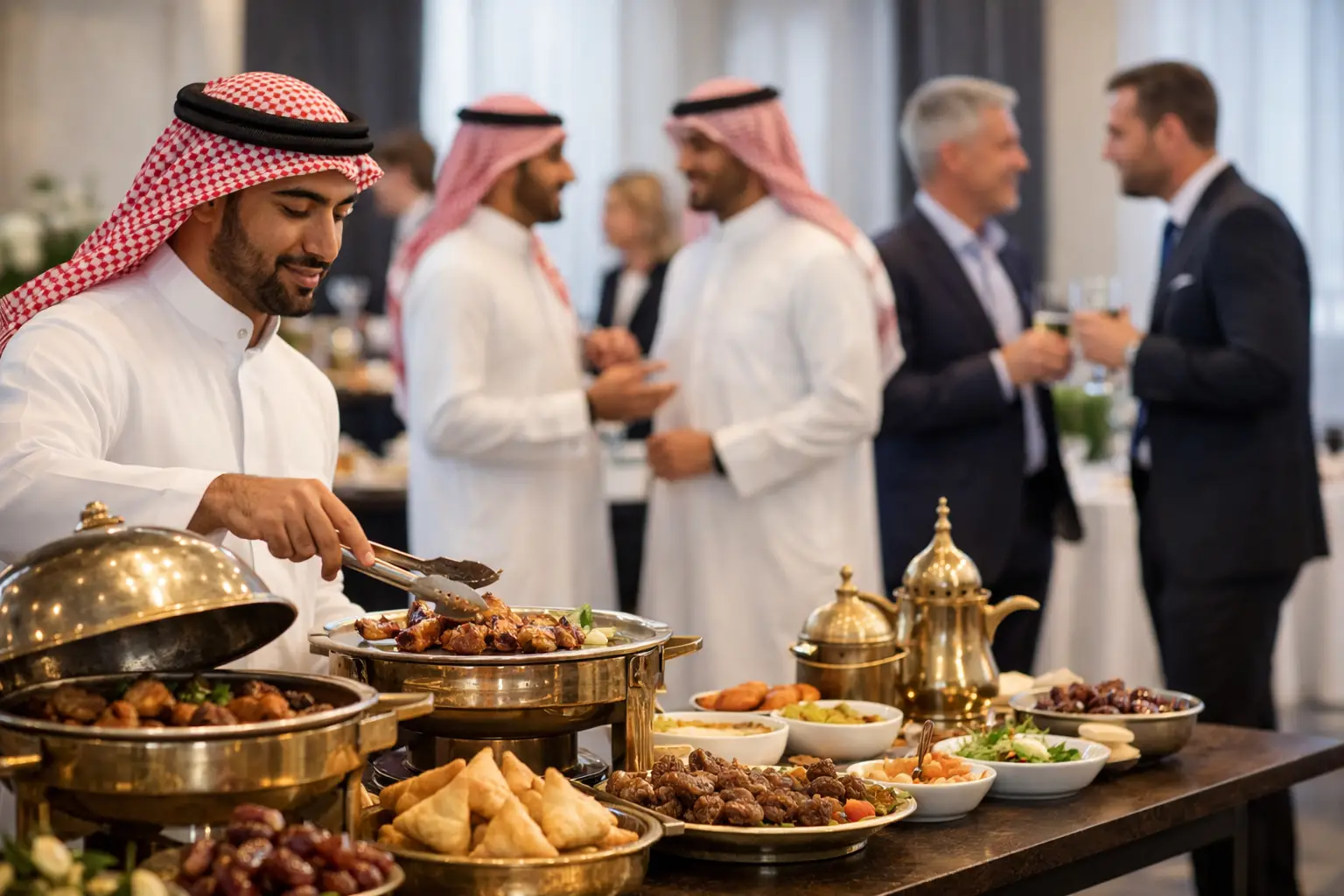
A guest’s first impression of a corporate event often begins before the first presentation. It begins with the welcome: fresh Arabic coffee served at the right moment, a well-composed breakfast table, attentive staff, and a setting that reflects the importance of the occasion. Saudi hospitality catering brings these details together with the operational discipline that formal business events require.
For organizations in Riyadh and across the Kingdom, catering is not simply a food order. It is a visible part of the event experience and, by extension, the organization’s reputation. Whether the occasion is a board meeting, government reception, conference, employee gathering, or VIP visit, every menu choice and service detail should feel considered.
What Defines Saudi Hospitality Catering?
Saudi hospitality is grounded in generosity, respect, and careful attention to guests. In a business setting, those values must be delivered with precision. Guests should feel genuinely welcomed, while organizers need confidence that service will be punctual, presentable, and managed without disruption.
This is where professional catering makes a meaningful difference. A hospitality partner must understand both the cultural expectations around welcoming guests and the practical requirements of a modern event. Coffee and dates may be central to a reception, but so are appropriate quantities, attractive presentation, food safety, staff coordination, and a service schedule that aligns with the agenda.
The most effective experience is not necessarily the largest or most elaborate. It is the one that suits the audience, venue, and purpose. A short executive meeting may call for refined coffee breaks and individual breakfast boxes. A full-day conference may require rotating refreshment stations, a substantial lunch service, and a clear replenishment plan. A VIP reception may demand an elevated hospitality stand with discreet, trained service staff.
Why Catering Standards Matter at Corporate Events
Corporate hosts are often managing several priorities at once: speakers, attendee registration, venue access, executive schedules, and internal approvals. Catering should reduce that pressure, not create another item to manage.
Punctuality is especially important. A delayed coffee break can affect the pace of a conference. An incomplete lunch setup can leave guests waiting at the very moment an organization intends to demonstrate care and professionalism. Dependable catering teams work from a confirmed service timeline, arrive prepared, and coordinate setup around the realities of the venue.
Presentation also carries weight. Food may be excellent, but an untidy buffet, poorly labeled menu, or inconsistent serving ware can undermine the experience. Premium hospitality relies on visual order as much as flavor. Tables should be proportioned for the guest count, service items should be clean and cohesive, and replenishment should happen quietly and promptly.
For formal events, the service staff is part of the brand environment. Professional attire, courteous communication, and awareness of guest flow are essential. The goal is attentive service that feels natural, never intrusive.
Building the Right Menu for the Occasion
A strong menu begins with the event format rather than a fixed package. The timing of the gathering, guest profile, duration, venue facilities, and level of formality all influence what should be served.
Morning meetings and breakfast service
Early meetings benefit from food that is easy to enjoy without slowing down the agenda. Fresh pastries, savory breakfast selections, fruit, yogurt, juices, Arabic coffee, and tea can create a welcoming start. For meetings with limited time or individual seating, breakfast boxes offer a polished and practical alternative to a shared station.
The trade-off is simple: buffet-style breakfasts feel more generous and encourage conversation, while boxed service is faster to distribute and easier to manage in boardrooms or training sessions. The right choice depends on available space, the meeting format, and whether guests are expected to arrive at the same time.
Coffee breaks that support the event flow
Coffee breaks are often treated as a small detail, yet they strongly influence guest comfort and energy. A thoughtfully planned break gives attendees a reason to pause, connect, and return to the program refreshed.
A balanced coffee break may combine premium hot beverages with cold drinks, light sweet selections, and savory bites. For longer programs, menus can vary between breaks so guests are not offered the same items repeatedly. This also gives organizers an opportunity to reflect the character of the event through seasonal choices, Saudi-inspired items, or more contemporary selections.
Lunch service for meetings and conferences
Lunch is where planning becomes more complex. A menu must satisfy guests while fitting the event schedule and venue. Formal seated meals can be appropriate for executive occasions, while buffets may be more efficient for larger groups. Individually packaged lunch boxes are often ideal for workshops, staff training, site meetings, and events where guests need to eat within a limited window.
The menu should offer enough variety without becoming unnecessarily complicated. A carefully selected balance of proteins, grains, vegetables, salads, breads, and desserts can accommodate a broad audience. Dietary requirements should be confirmed early, particularly for vegetarian, vegan, gluten-sensitive, or allergy-conscious guests. Clear labeling is a practical sign of thoughtful hospitality.
Saudi Hospitality Catering for VIP Guests
VIP hospitality requires a higher level of restraint and detail. The purpose is not to overwhelm guests with excess. It is to create a welcoming environment where every element feels intentional, from the quality of coffee and dates to the placement of serving pieces and the conduct of staff.
For executive receptions, protocol-sensitive gatherings, and important client visits, a dedicated hospitality stand can provide a refined focal point. Arabic coffee, tea, dates, premium sweets, canapés, and selected beverages may be arranged to suit the time of day and level of formality. The presentation should complement the venue rather than compete with it.
Service timing matters as much as the menu. Staff should understand when to offer refreshments, when to replenish, and when discretion is required. In these settings, experienced coordination is often more valuable than an extensive menu. A modest selection served impeccably will leave a stronger impression than an oversized display that lacks order.
How to Choose a Catering Partner
The best catering partner is one that can translate an event brief into a dependable service plan. Before confirming a provider, decision-makers should look beyond menu photos and consider how the team manages execution.
Ask how the caterer plans for guest counts, dietary needs, setup windows, venue restrictions, and changes to the event schedule. Confirm whether trained service staff are available when the occasion requires them, and whether the provider can customize menus to match the organization’s standards and budget. These discussions reveal whether a company is prepared to support the event as a hospitality partner rather than simply deliver food.
It is also useful to consider the provider’s experience with comparable occasions. Corporate lunches, recurring office needs, large conferences, and VIP receptions each require different planning methods. A caterer that understands these distinctions can recommend the right format before problems arise.
Catering Dor approaches each requirement with this level of care, combining authentic Saudi hospitality with structured service for meetings, events, and institutional occasions. The objective is clear: food and service that represent the host with confidence.
Planning Details That Prevent Last-Minute Issues
The clearest event briefs usually include the date, venue, expected guest count, service times, preferred menu style, dietary requirements, and any access limitations. Sharing these details early allows the catering team to plan quantities, staffing, equipment, and presentation properly.
Guest counts deserve particular attention. Ordering too little affects the guest experience, while ordering far beyond the expected attendance can create unnecessary cost and waste. For events with uncertain attendance, an experienced caterer can advise on practical contingency quantities based on the format and guest profile.
Venue conditions matter as well. A hotel ballroom, office meeting room, outdoor venue, and conference center each present different setup considerations. Access to preparation space, elevators, parking, power, tables, and waste disposal can shape the service plan. Discussing these conditions in advance helps ensure the catering setup looks composed from the first guest arrival.
A successful event should allow hosts to focus on their guests, agenda, and organization. When hospitality is planned with cultural understanding, polished presentation, and dependable execution, every coffee break, lunch service, and VIP welcome becomes a quiet expression of respect.