Boxed Meals vs Buffet Catering for Events
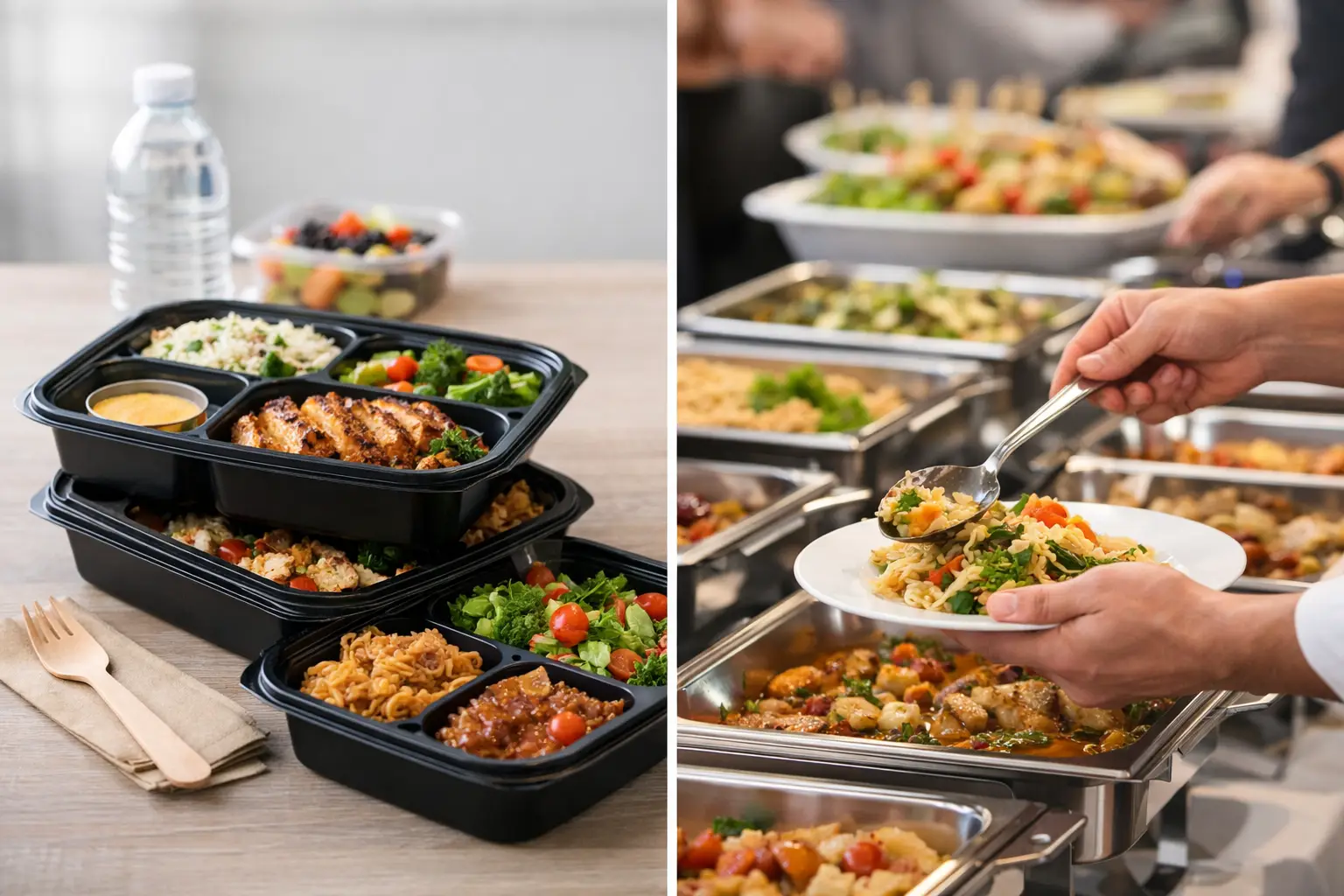
A 9:00 a.m. executive meeting that begins late because guests are waiting in a lunch line sends the wrong message. Yet a formal reception where every guest receives a boxed meal can feel more functional than welcoming. The decision between boxed meals vs buffet catering is not simply about the menu. It shapes timing, presentation, guest movement, staffing, and the standard of hospitality your organization communicates.
For corporate meetings, government functions, conferences, and VIP occasions, the right choice depends on what the event needs to achieve. A well-planned meal service should support the agenda while making every guest feel considered.
Boxed Meals vs Buffet Catering: The Core Difference
Boxed meals are individually packed, portioned meals prepared for each guest. They are typically delivered ready to serve and can include a main course, sides, dessert, beverages, and dietary labels. Their strength is control: planners know how many meals are required, guests receive food quickly, and the room remains organized.
Buffet catering presents a curated selection of dishes on a shared service line or hospitality station. Guests choose their preferred items and portions, often with professional service staff managing the setup and replenishment. Its strength is abundance and interaction: the experience feels more generous, social, and suited to a wider range of tastes.
Neither format is automatically more premium. Quality depends on menu design, food temperature, packaging or presentation, service standards, and the way the catering format fits the occasion.
When Boxed Meals Are the Better Choice
Boxed meals are especially effective when the schedule is tight and the guest list is clear. They remove the need for guests to queue, select dishes, or move between rooms. For a training session, board meeting, site visit, or working lunch, this can protect valuable time and keep attention on the program.
They are also a practical choice for events held in classrooms, meeting rooms, offices, or venues with limited dining space. Guests can eat at their seats or collect their meal during a designated break. For large attendance numbers, this reduces congestion and makes distribution easier to manage.
Precision for Busy Corporate Schedules
When a meeting has a fixed 30- or 45-minute lunch window, individual meals help the event stay on schedule. Service can begin immediately, rather than waiting for a buffet to be opened and for every guest to pass through the line. This is particularly valuable when senior leaders, external delegates, or speakers have a tightly managed agenda.
Portion control also gives procurement and event teams greater predictability. With confirmed meal counts, planners can budget more precisely and reduce the uncertainty that sometimes comes with open buffet consumption.
Clear Support for Dietary Needs
For groups with documented dietary requirements, boxed meals can offer confidence and clarity. Meals can be labeled for vegetarian, vegan, gluten-aware, low-calorie, or specific allergen-related needs. This helps guests identify the appropriate option without needing a separate conversation at the service station.
That said, labels must be accurate and distribution must be carefully organized. A boxed meal program only works well when RSVP information is collected early and the catering team has a reliable final count.
Where Boxed Meals Need More Attention
Individual meals can feel less ceremonial if the packaging, menu composition, and setup are treated as an afterthought. A premium box should be thoughtfully presented, complete, easy to enjoy, and appropriate for the time of day. Cold items must remain fresh, hot items must be served at the proper temperature, and the contents should feel like a complete meal rather than a convenient substitute.
Boxed meals can also create waste if attendance changes unexpectedly. Ordering too close to the confirmed headcount is efficient, but it leaves little margin for additional guests. Ordering with a larger buffer protects availability but may increase unused meals.
When Buffet Catering Creates a Stronger Experience
Buffet catering is often the better fit when hospitality is part of the event itself. A buffet gives guests choice, creates a more relaxed rhythm, and brings visual presence to the room. For a client reception, leadership gathering, company celebration, or formal luncheon, a well-styled buffet can reinforce the importance of the occasion.
It is particularly valuable for diverse groups. Guests may prefer lighter dishes, traditional favorites, vegetarian options, or different proteins. A balanced buffet allows individuals to select what suits them while creating a more inclusive dining experience.
A More Generous and Social Format
Food service has a role beyond nourishment at many events. It creates moments for conversation, introductions, and relationship building. A buffet encourages guests to move, connect, and engage naturally before returning to the program or continuing informal discussion.
For hospitality-driven occasions in Saudi Arabia, presentation matters as much as variety. Elegant chafing displays, polished serving arrangements, attentive staff, and carefully selected menu items can transform a meal break into an expression of welcome and respect.
Flexibility for Changing Attendance
Buffets can better accommodate modest fluctuations in attendance, especially when the menu includes generous quantities and multiple components. They also work well for events where guests arrive at slightly different times or where some attendees may only take light refreshments.
However, flexibility does not mean unlimited capacity. Attendance estimates still matter for food quality, staffing, equipment, and service flow. A professional catering team will plan realistic quantities while maintaining a full, refined presentation throughout the service period.
Where Buffets Require More Planning
A buffet needs space. The service line should not block entrances, presentation areas, or guest circulation. It also needs a sensible location, sufficient tables, appropriate heating or cooling equipment, and staff who can replenish dishes and maintain a clean, polished appearance.
Timing deserves equal attention. If 150 guests are released for lunch at once, one short buffet line may create delays. Multiple stations, staggered breaks, or served buffet support can keep the experience efficient. The more formal the audience, the less acceptable a long queue becomes.
Choose Based on the Event, Not Just the Headcount
Guest count is useful, but it should not be the deciding factor on its own. A 40-person executive workshop may require boxed meals because the group has only 25 minutes for lunch. A 40-person VIP reception may call for an elegant buffet because hosting and conversation are the priority.
Begin with the event agenda. Ask whether guests need to eat quickly, remain seated, network, or experience a formal hospitality moment. Then consider the venue layout, available break time, guest profile, dietary needs, and whether there will be trained staff on site.
The following situations offer a practical guide:
- Choose boxed meals for working lunches, training sessions, off-site operations, travel schedules, and events with short, fixed breaks.
- Choose buffet catering for receptions, longer lunch periods, networking events, mixed guest preferences, and occasions where visual hospitality matters.
- Consider a hybrid approach for conferences: boxed meals for speakers or VIPs with limited time, alongside a buffet for general attendees.
- Use individually portioned items within a buffet setting when you want the visual appeal of a hospitality station with added convenience and clearer dietary handling.
Presentation and Service Define the Final Impression
The format matters, but execution matters more. A buffet with uneven replenishment or an understaffed service line can diminish an otherwise important occasion. Likewise, a boxed meal that arrives late, lacks clear labeling, or feels poorly packaged can undermine a carefully organized meeting.
Premium catering should account for the details guests notice immediately: punctual delivery, menu balance, food temperature, table styling, clean service areas, professional staff, and a calm response to last-minute adjustments. These operational elements protect both the guest experience and the reputation of the host organization.
Catering Dor approaches meal service as part of the event experience, not a separate logistical task. Whether the right solution is a refined lunch box program or a professionally staffed buffet, the objective remains the same: deliver dependable service that reflects the importance of your guests.
The best choice is the one that lets your guests feel welcomed without making them think about the catering at all. When the service is planned around the agenda, venue, and audience, the meal becomes a quiet mark of professionalism that guests remember for the right reasons.