Event Catering Checklist for Organizers
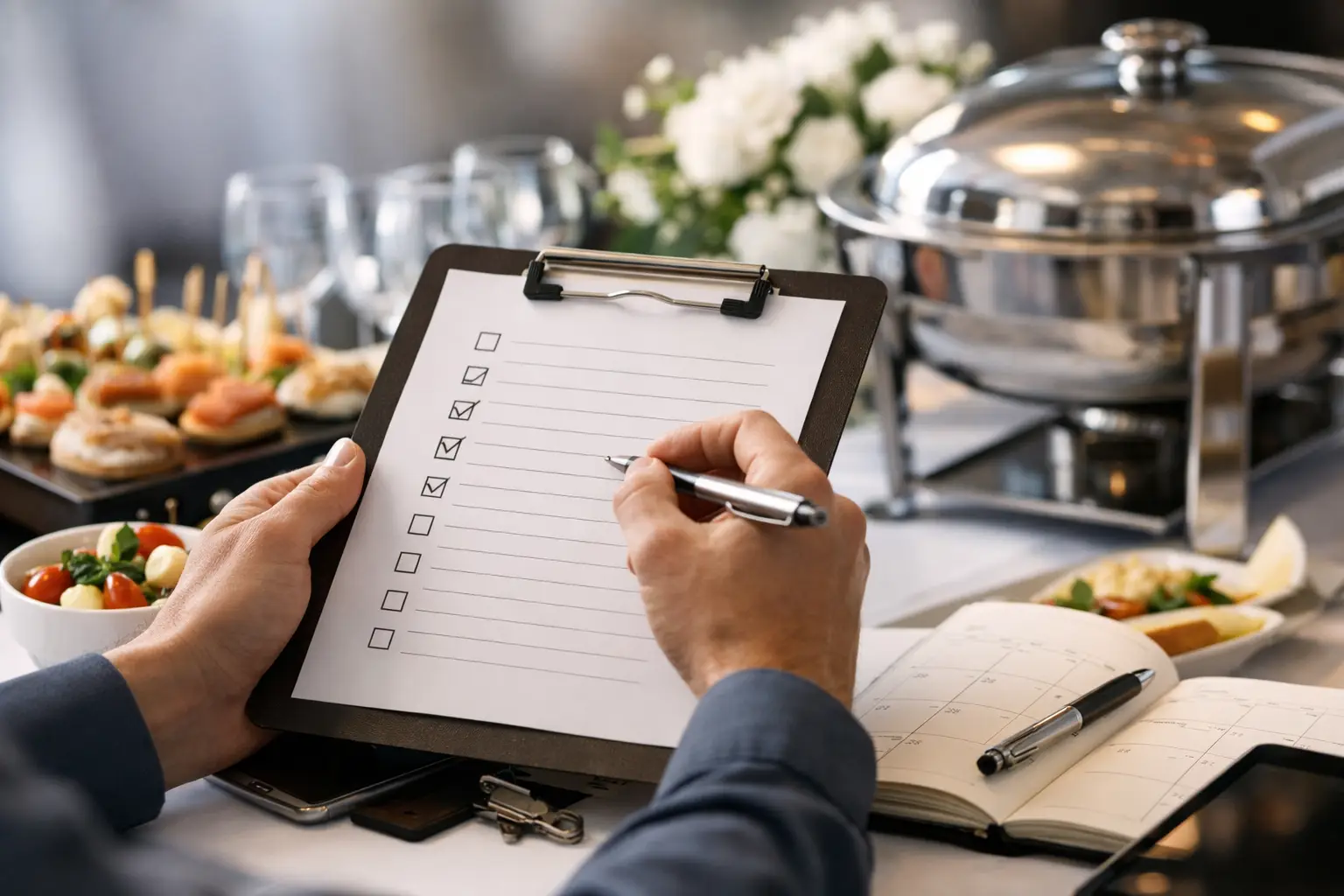
A late coffee break, an undersized lunch setup, or a missing dietary meal can become the detail guests remember most. For meetings, conferences, VIP receptions, and formal company occasions, an event catering checklist for organizers turns hospitality from a last-minute concern into a well-managed part of the guest experience.
The goal is not simply to provide food. It is to create a setting where guests feel anticipated, respected, and comfortable from arrival through the final conversation. That requires clear decisions early, precise event information, and a catering partner equipped to deliver with consistency.
Start the Event Catering Checklist for Organizers Early
Catering decisions should begin as soon as the event date and venue are confirmed. Waiting until the guest list is final may seem practical, but it often limits menu selection, staffing options, equipment availability, and the time needed to accommodate special requests.
Begin with the purpose of the occasion. A board meeting, training day, product launch, government reception, and employee appreciation event each call for a different hospitality approach. A working breakfast needs food that is easy to serve and eat without interrupting discussion. A VIP reception may require refined canapes, premium beverages, and professional service staff. A full-day conference needs carefully timed breaks that keep energy high without disrupting the program.
At this stage, confirm the event date, guest arrival time, food service times, venue access window, expected guest count, and budget range. Also identify who has final approval over menus, branding, guest numbers, and invoices. Clear ownership prevents delays when decisions need to be made quickly.
Define the Guest Experience Before Choosing the Menu
A menu should reflect the event rather than follow a generic package. Consider the guest profile, the time of day, the format of the gathering, and the level of formality expected. Senior executives and external guests may appreciate a hosted service experience, while an internal workshop may benefit from well-presented individual breakfast or lunch boxes that keep the schedule moving.
Ask whether guests will be seated, standing, networking, or moving between sessions. This affects everything from portion style to table placement. For example, plated meals may suit a formal executive luncheon, while buffet service can work well for larger groups when venue flow allows it. Individually packaged meals offer efficiency and hygiene, but they may not deliver the same sense of occasion as a staffed buffet or reception display.
Your menu planning should account for five essentials:
- The meal occasion, such as breakfast, coffee break, lunch, afternoon refreshments, or evening reception
- Guest demographics and cultural preferences, including appropriate Saudi hospitality traditions where relevant
- Dietary requirements, including vegetarian, vegan, gluten-free, dairy-free, and allergy-sensitive meals
- The balance of familiar favorites and distinctive items that elevate the occasion
- Beverage needs, from Arabic coffee and tea to water, juices, and specialty coffee service
Avoid treating dietary accommodations as an afterthought. Confirm the number of guests with each requirement, how those meals will be labeled, and how they will be kept separate during service. For high-profile events, it is wise to include a small contingency quantity of selected dietary options if the final attendee list remains uncertain.
Plan Portions for the Reality of the Schedule
Portion planning depends on more than head count. Guests arriving after a long session, traveling from another city, or attending an event over a traditional meal period will likely have stronger appetites. A light lunch may be suitable for a short internal meeting, but it can feel inadequate after a morning conference.
The same principle applies to coffee breaks. A 15-minute break may need portable pastries, savory bites, fruit, and fast beverage access. A 45-minute networking break can support a broader display with more substantial options. Share the full agenda with your caterer so food quantity and format match the pace of the day.
Confirm Venue Operations and Service Requirements
Even an excellent menu can underperform if venue logistics are not addressed. Before finalizing service, confirm whether the venue has a functioning kitchen, preparation space, power access, water access, loading routes, elevators, parking rules, and waste disposal procedures. If the event is held in an office, ask where food can be staged without blocking employee movement or guest registration.
Be specific about where service will take place. Coffee stations positioned too far from meeting rooms can cause late returns from breaks. A buffet placed near a crowded entrance can create congestion. For a reception, service points should support natural guest movement rather than divide the room.
Discuss the event’s operational needs with the catering team, including:
- Delivery and setup time, plus the time required for clearing and breakdown
- Required tables, linens, chafing equipment, serving ware, signage, and display stands
- The number of trained service staff needed for setup, replenishment, guest assistance, and cleanup
- Security clearance, loading instructions, and contact details for venue management
- Presentation requirements, including branded elements, VIP stands, or formal table styling
It depends on the venue whether the caterer supplies every service element or works with the event planner and venue team. The important point is that responsibilities are assigned in writing. No organizer should discover an hour before guests arrive that no one has arranged tables for the beverage station.
Build Timing Into Every Catering Decision
Punctuality is a visible part of hospitality. Guests may not see the preparation behind a polished service, but they immediately notice when coffee is not ready, a buffet opens late, or lunch arrives after the agenda has resumed.
Work backward from each service time. Set a target for delivery, equipment placement, food setup, final presentation checks, and staff briefing. For formal events, allow sufficient time for the service team to inspect displays, confirm food temperatures, replenish beverages, and ensure dietary labels are in place before the first guest enters.
Keep the program flexible enough to absorb small delays. If a keynote runs over by 15 minutes, can the coffee break remain fresh? If lunch is moved earlier, can service begin without compromising quality? A capable catering partner will help plan these contingencies, but the organizer should identify who is authorized to adjust timing on the event day.
Assign One On-Site Decision Maker
Every event needs a single catering contact who can make immediate decisions. This person should know the final guest count, menu, room plan, agenda, VIP requirements, and escalation process. They do not need to manage every detail personally, but they should be available when a service adjustment is required.
Provide the catering lead with the mobile number of the event coordinator and venue representative. In return, request the name and number of the on-site catering supervisor. This simple exchange protects the event from avoidable communication gaps.
Review Presentation, Food Safety, and Guest Comfort
Premium catering is experienced through details. Serving ware should be clean and appropriate to the event. Buffets should remain orderly as guests move through them. Beverage stations should be replenished quietly. Service staff should be polished, attentive, and aware of the occasion’s level of formality.
Food safety deserves the same attention as presentation. Confirm that hot food will be maintained at proper temperatures, cold items will be protected, allergens will be clearly communicated, and the team has a plan for leftovers and waste. For outdoor events, weather, shade, refrigeration, and insect protection must be considered early because they can change the menu and service format significantly.
Before the event, request a final confirmation that includes the agreed menu, quantity, dietary meals, service schedule, setup requirements, staffing, and billing details. This is the moment to correct assumptions, not the morning of the event.
For organizations hosting important guests, hospitality is part of the brand people encounter in the room. Catering Dor approaches that responsibility with customized menus, trained service teams, and polished presentation designed for professional occasions. When every detail is anticipated, organizers can focus on their guests, their program, and the conversations that matter most.